
The owner said the dog seemed drunk. That description, common as it is, perfectly captures the early presentation of ivermectin toxicity. The Border Collie in front of me was weaving slightly, bumping into the exam table, and having trouble focusing his eyes. His owner had given him what she thought was a small amount of horse dewormer the day before. Twenty hours later, she noticed him walking strangely.
Recognizing the clinical signs of ivermectin toxicity at each stage is critical for appropriate triage, treatment decisions, and prognostic discussions with owners. What follows is the progression I have witnessed in hundreds of cases over my career. Understanding this sequence helps predict what is coming and guides how aggressively we need to intervene.
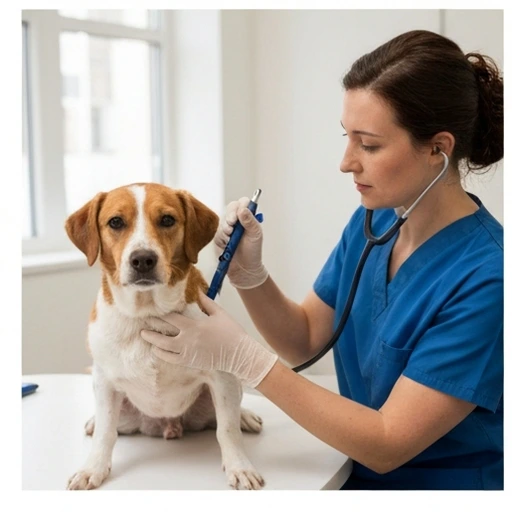
The Typical Timeline
Ivermectin toxicity does not present immediately after exposure. Even with massive doses, there is typically a lag of several hours before clinical signs appear. This delay reflects the time required for the drug to distribute into the central nervous system and accumulate to toxic concentrations.
In most cases, signs begin 4 to 12 hours after oral ingestion. Topical exposures may have a longer lag, sometimes 12 to 24 hours, because absorption through skin is slower. The initial signs are subtle enough that many owners miss them entirely or attribute them to something benign. By the time they recognize something is seriously wrong, 12 to 36 hours may have passed.
This timeline creates a dangerous false sense of security. An owner might watch their dog for a few hours after exposure, see no problems, and assume the dog tolerated the dose. Meanwhile, drug concentrations continue building in the brain. Understanding the mechanism behind this accumulation helps explain why delayed symptoms can still be severe.
Stage 1: Early Signs (Mild Toxicity)
The earliest signs are easily dismissed. Affected dogs may seem slightly off balance, particularly when changing direction or navigating tight spaces. They might have a subtle head tilt or seem to track moving objects more slowly than usual. Appetite is often reduced, though some dogs continue eating normally.
Pupil changes begin early but can be subtle. The pupils may be slightly larger than expected for the ambient light, and the pupillary light reflex may be sluggish. Many owners do not notice this because they are not specifically looking at their dog's eyes.
Hypersalivation is common in early toxicity. The dog may drool more than usual, or you might notice wet spots on bedding. Some dogs swallow repeatedly as if nauseous, though vomiting at this stage is variable.
Behavioral changes are frequent but nonspecific. The dog may seem quieter than usual, reluctant to play, or uninterested in activities that normally excite them. They might seek out dark, quiet places to rest. These changes are so subtle that owners often attribute them to the dog being tired or not feeling well for unrelated reasons.
Clinical Assessment at Stage 1
- Mild ataxia, sometimes only noticeable on turns or stairs
- Mild to moderate mydriasis with sluggish pupillary light reflex
- Hypersalivation
- Reduced appetite or mild GI signs
- Normal or minimally decreased mental status
- Normal vital signs except possibly mild bradycardia
Dogs presenting at Stage 1 have the best prognosis with appropriate treatment. If the exposure dose was not massive and supportive care begins promptly, most of these dogs recover without lasting effects.
Stage 2: Progressive Signs (Moderate Toxicity)
Without treatment, or with continued drug accumulation from a large exposure, toxicity progresses. The ataxia becomes unmistakable. Affected dogs walk like they are intoxicated, frequently stumbling and sometimes falling. They may have difficulty rising or maintaining position when standing still.
Mydriasis becomes pronounced. The pupils are widely dilated and barely respond to even bright light. Vision appears impaired, though at this stage it is difficult to distinguish true blindness from the general disorientation. Dogs may bump into objects or fail to respond to visual threats.
Tremors often appear during Stage 2. These may begin as fine muscle fasciculations, barely visible rippling under the skin, progressing to obvious trembling that the owner cannot miss. The tremors typically affect the whole body but may be more pronounced in the limbs.
Mental status declines noticeably. The dog becomes dull, slow to respond to their name, and uninterested in their surroundings. They may stand in one place staring blankly or press their head against a wall or corner. Some dogs vocalize without apparent cause.
Clinical Assessment at Stage 2
- Moderate to severe ataxia with frequent stumbling or falling
- Marked mydriasis with absent or minimal pupillary light reflex
- Visible tremors or muscle fasciculations
- Apparent visual impairment
- Obtunded mental status but still responsive to stimuli
- Bradycardia (heart rate typically 40-60 bpm in large dogs)
- Possible hypothermia beginning
Stage 2 represents a critical decision point. Dogs at this stage require intensive supportive care. The next 12 to 24 hours will determine whether they stabilize or progress to life-threatening toxicity.
Stage 3: Severe Toxicity
At Stage 3, the dog can no longer stand. They lie in lateral recumbency, unable to right themselves when rolled. Tremors may have progressed to seizure activity, or paradoxically, the dog may become very still as the nervous system becomes increasingly depressed.
The pupils are fixed and dilated, completely unresponsive to light. The corneal reflex, the blink response when the eye surface is touched, may be absent or severely diminished. Gag reflex is reduced or absent, creating significant aspiration risk.
Respiratory changes become apparent. Breathing may be slow and shallow. Some dogs develop periodic breathing with alternating apnea and hyperventilation. The respiratory center in the brainstem is being affected, and this is a grave sign.
Hypothermia is common because the dog can no longer regulate body temperature effectively. Bradycardia is pronounced, with heart rates sometimes dropping below 40 beats per minute in large dogs.
Clinical Assessment at Stage 3
- Recumbent, unable to stand or right self
- Fixed, dilated pupils with no response to light
- Absent or minimal corneal and gag reflexes
- Seizure activity or profound CNS depression
- Respiratory depression with possible periodic breathing
- Severe bradycardia
- Hypothermia requiring active warming
- Stuporous to comatose
Stage 4: Life-Threatening / Coma
The final stage is characterized by complete unresponsiveness. The dog is comatose, with no response to painful stimuli. Respiratory effort may be absent or so minimal that the dog cannot maintain adequate oxygenation without support.
At this stage, we are providing full life support. Mechanical ventilation is often required. Cardiovascular support may be needed. We are essentially maintaining the dog's vital functions while waiting for the drug to clear from the brain, a process that can take days to weeks depending on the dose and the dog's metabolism.
I have to be honest with owners when we reach this point. Some dogs do recover from Stage 4 toxicity, even after prolonged coma. I have seen dogs wake up after five or six days of unconsciousness and eventually return to normal. But many do not. The longer the coma persists, and the higher the suspected exposure dose, the worse the prognosis.
Prognostic Indicators
Several factors help predict outcome in ivermectin toxicity cases. None of these are absolute, but they guide my conversations with owners and my treatment intensity recommendations.
Factors Suggesting Better Prognosis
- Lower exposure dose (known or estimated)
- Earlier presentation (Stage 1 or early Stage 2)
- Heterozygous MDR1 status (N/M) rather than homozygous (M/M)
- Preserved gag reflex and respiratory drive
- Response to treatment within first 24-48 hours
- Younger, otherwise healthy dog
Factors Suggesting Worse Prognosis
- Massive exposure dose (livestock product ingestion)
- Late presentation (Stage 3 or 4)
- Homozygous MDR1 status (M/M)
- Complete absence of brainstem reflexes
- No improvement after 72-96 hours of treatment
- Concurrent medical conditions
- Development of aspiration pneumonia
The Differential Diagnosis Challenge
When owners do not know about an exposure, ivermectin toxicity can be mistaken for other conditions. The early signs mimic vestibular disease, which is common in dogs. The later signs can look like antifreeze poisoning, certain mushroom toxicities, or primary brain disease.
I always ask detailed questions about potential exposures. Does anyone in the household have horses, cattle, sheep, or goats? Are there livestock medications anywhere the dog could access? Has anyone given the dog any medications, supplements, or treatments in the past 48 hours? Has the dog been to any farms, barns, or rural properties recently?
Breed is a crucial clue. When an Australian Shepherd, Collie, Shetland Sheepdog, or their mix presents with progressive neurological signs, ivermectin toxicity should be near the top of the differential list even without known exposure. These breeds carry MDR1 mutations at high frequency, as detailed in our breed prevalence statistics.
There is no rapid test for ivermectin levels that can be done in most emergency clinics. Diagnosis is typically clinical, based on breed, history, and the characteristic progression of signs. Samples can be sent to specialized laboratories for confirmation, but results take days and do not change immediate treatment.
What Owners Need to Know
If you are reading this because you are concerned your dog may have ivermectin toxicity, here is what I need you to understand.
Do not wait. If your dog is showing any signs, or if you know they were exposed to a macrocyclic lactone product, seek veterinary care immediately. The earlier we intervene, the better the outcome. Our first aid guide covers what you can do before reaching the clinic.
Bring any product containers or information about what your dog was exposed to. Knowing the specific product and estimating the dose helps me predict severity and plan treatment.
Be prepared for a potentially prolonged hospitalization. Dogs with moderate to severe toxicity often need days of intensive care. Some need weeks. This is expensive and emotionally draining, but recovery is possible in many cases.
Understand that symptoms may worsen before they improve. Even with treatment, drug concentrations in the brain may continue rising for 24 to 48 hours if the exposure was recent. Your dog may look worse on day two than day one. This does not necessarily mean treatment is failing.
For detailed information on how we treat these cases and what to expect during hospitalization, see our treatment protocol guide.
A Case That Stayed With Me
I treated a young Shetland Sheepdog several years ago who came in at Stage 3. She had been exposed to cattle ivermectin injectable when she chewed through a syringe cap. By the time her owner found her, she was already seizing. By the time she reached my clinic, she was comatose.
We provided intensive support for eleven days. She was mechanically ventilated for five of them. Her owners visited daily, talking to her, hoping for any sign of response. On day seven, her eyes began tracking movement. On day nine, she lifted her head. On day eleven, she stood and wagged her tail.
Six weeks later, she was completely normal. Her owners now have a locked medication cabinet and she wears a tag noting her MDR1 status.
Not every case ends this way. I have lost dogs despite everything we could do. But stories like hers remind me why we fight so hard and why early recognition matters so much. The sooner we identify toxicity, the better our chances of a happy ending.